Stay updated with the latest EU and US market trends, import tax adjustments, quality inspection regulations and TC certification updates. Subscribers receive our monthly industry report for free via email.

Stop falling for the widely circulated fake old clothing disposal logic of "resale and donation > fabric recycling > energy recovery > landfill"!
别再被网上流传的「转卖捐赠>面料再生>能量回收>填埋」旧衣处理伪逻辑蒙蔽双眼!
Don Choi
5/28/20265 min read
Stop falling for the widely circulated fake old clothing disposal logic of "resale and donation > fabric recycling > energy recovery > landfill"!
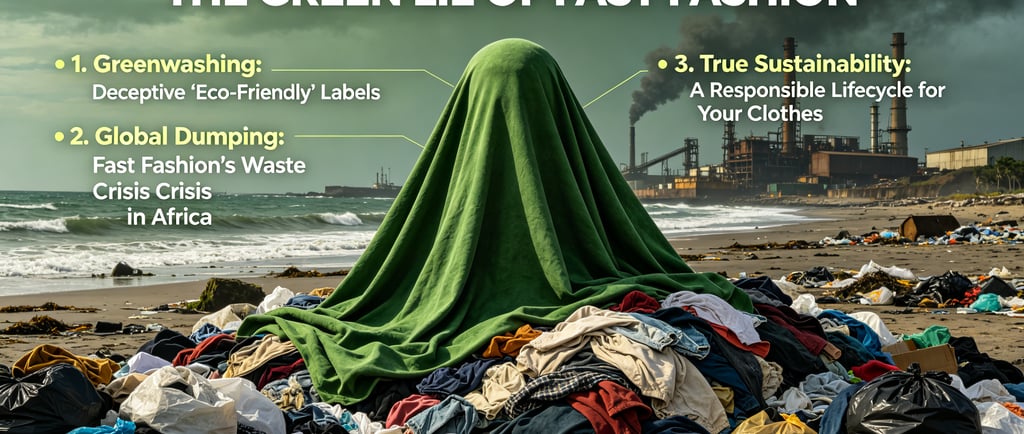
When you casually toss that fast-fashion T-shirt that pilled and lost its shape after two wears into your community recycling bin, patting yourself on the back for your "eco-friendly good deed," the piece you just donated might be rotting on a beach in Ghana alongside 100,000 other pieces of fast-fashion waste. And the carbon emissions from that garment were already counted in the astronomical 92 million tons of global textile waste the moment you placed your order.
This is not alarmist talk – fast-fashion giants and fake environmental groups are colluding to weave the biggest green scam of the century. On one hand, they lure you into buying disposable clothes made from petroleum byproducts at rock-bottom prices like $9.9. On the other hand, they slap a "recycled fabric" green label on their products to cash in on your environmental goodwill, then turn around and ship tons of unrecyclable chemical fiber waste to developing countries, calling it "used clothing donation." In essence, it is naked environmental aggression.
Today we are pulling off the three layers of fig leaves from these fake environmentalists
First layer: Using green labels as a cover, shifting all responsibility to consumers
Do you think those big brands selling "eco-friendly collections" are actually doing something for the environment? Wake up. The so-called recycled polyester clothes they sell require strong acid soaking and high-temperature melting to turn recycled plastic bottles into fibers. The entire process consumes so much electricity and discharges so much waste liquid that its carbon footprint is 30% higher than that of producing new polyester directly. The so-called "bio-based materials" are even more of a gimmick: they require twice as much heavy metal dye for coloring, causing more pollution than ordinary fabrics. Essentially, they are just shifting the pollution out of your sight to upstream factories. The "eco-friendly clothes" you buy at a premium actually harm the planet more than ordinary clothes.
Second layer: Turning used clothing recycling into a cross-border waste business
For brands that tout "used clothing recycling programs," the clothes you donate never actually get recycled. Pieces in decent condition are resold on the second-hand market for profit, while poor-quality ones are directly packed into containers and shipped to Africa and Southeast Asia. Over the past 10 years, Ghana alone has received more than 15 million tons of Western fast-fashion waste. Local coastlines are piled into garbage mountains of colorful chemical fiber clothes. The black smoke from burning unwearable clothes can shroud entire cities. The local textile industry has been completely crushed by second-hand clothes sold for a few dollars apiece, leaving workers unemployed, land polluted, and air toxic. All the costs are borne by the most vulnerable groups. This is not charity – it is slow slaughter carried out with petroleum derivatives.
Third layer: Kidnapping the entire industrial chain with the false name of "circular economy"
Even more cunning brands turn used clothing recycling into a yoke to exploit OEM factories: they require factories to take on used clothing refurbishment business, but only pay one-third of the market rate for processing fees, and even make "cooperation in recycling" a threshold for future orders. Fast-fashion fabrics are inherently chemical fiber blends that deform after three wears, with no recycling value at all. No matter how loudly brands shout about "circular economy," it is essentially asking the entire industrial chain to clean up the mess of their "disposable clothing" business model. They never intended to actually engage in environmental protection from the start – recycling is just a tool to beautify their financial reports and hold the supply chain hostage.
Stop believing the nonsense that "end-of-life recycling saves the planet." Environmental protection never starts when you throw away clothes – it is decided the moment you place your order. As the Nexus Apparel Alliance, which has been deeply involved in the textile environmental protection field for 12 years, we are today clearly laying out the truly responsible full-lifecycle old clothing disposal logic to cut off the living space of fake environmental protection at the root:
🔹 Step 1: Defense starts at purchase, refuse to be a sucker from the source
Don’t wait until your clothes pile up like a mountain to think about how to dispose of them. When picking clothes, look carefully first: are you buying high-quality clothing that can last more than 3 years, or disposable fast-fashion garbage that falls apart after 3 wears? Those cheap chemical fiber clothes that cost a few or tens of dollars are inherently petroleum byproducts, generating huge carbon emissions from the production stage, and are so poorly made that they can only be scrapped after a few wears. No amount of "recycling" later will be of any use – not buying them is the most effective form of environmental protection.
🔹 Step 2: Extend the service life as much as possible, don’t rush to dispose of clothes
If the clothing is made of solid fabric and has a classic cut, don’t throw it away directly just because of a small loose seam or minor stain: patch it, change the buttons, adjust the fit, or even add a small design, and it can become a unique vintage piece. Wearing it one more day means one less new garment needs to be produced – this is more environmentally friendly than any recycling method.
🔹 Step 3: The premise of resale/donation is "do not do to others what you do not want done to yourself"
Only consider passing on clothing when you are truly sure you don’t need it anymore, and don’t use charity as a garbage dump. The clothes must be washed, disinfected, free of obvious damage and stubborn stains, and confirmed to be wearable for the next owner before you resell them, give them to friends, or donate them to formal channels. Don’t stuff clothes that you yourself find too dirty or worn out into recycling bins just to ease your conscience. That’s not environmental protection – that’s unethical.
🔹 Step 4: Only carry out "one-time recycling" for fabrics, reject the false proposition of infinite circulation
When clothes are truly unwearable, sort them before disposal:
• For natural fabrics such as cotton, linen, and silk, they can be sent to formal recycling channels. These materials cause little pollution during recycling, and can be made into long-lasting products such as insulation cotton, cloth bags, and home fabrics, which is truly putting waste to good use.
• For chemical fabrics such as synthetic fibers and blends, don’t buy into the gimmick of repeated recycling – each cycle degrades part of these fabrics and releases more microplastics. Making them into lower-quality recycled products that are thrown away after two uses is just creating garbage in another form. We only support one-time closed-loop recycling, and will never consume resources repeatedly just for the false reputation of "circulation."
🔹 Step 5: Prioritize energy recovery over landfill, never transfer waste
For clothing with no recycling value at all, prioritize sending it to formal energy incineration plants for power generation. The residue after incineration can also be used as building materials, which occupies less land and leaches less polluting liquid than direct landfill. Never ship these unprocessable chemical fabrics to developing countries to make others pay for our costs. Shifting pollution to more vulnerable groups is the most shameful act in the environmental protection circle.
We have compiled a list of formal used clothing recycling channels, a guide to avoiding greenwashing fast-fashion brands, and easy-to-follow used clothing upcycling tutorials for ordinary people. All are available for free on the official website of Nexus Apparel Alliance: www.nexusapparelalliance.org
别再被网上流传的「转卖捐赠>面料再生>能量回收>填埋」旧衣处理伪逻辑蒙蔽双眼!
当你随手将穿两次就起球变形的快时尚T恤塞进小区回收箱,还为自己的「环保善举」暗自得意时,殊不知,这件衣服可能正与10万件快时尚垃圾一同,在加纳的沙滩上腐烂发臭。而这件衣服的碳排放,早在你下单的那一刻,就已被计入9200万吨全球纺织废料的庞大数字中。
这不是危言耸听,而是快时尚巨头与伪环保组织联手炮制的本世纪最大绿色骗局。他们一边用9块9的低价诱惑你购买石油副产品制成的一次性衣物,一边贴上「再生面料」的绿标,堂而皇之地收割你的环保税。转头,他们便将根本无法回收的化纤垃圾成吨倾倒至发展中国家,美其名曰「旧衣捐赠」,实则是一场赤裸裸的环境侵略。
今天,深耕纺织环保领域12年的Nexus Apparel Alliance,将为你揭开这些伪环保者的三层遮羞布,并奉上真正对地球负责的旧衣全生命周期处理逻辑,从根源上斩断伪环保的生存空间。
伪环保者的三层底裤
第一层:绿标遮羞,责任转嫁消费者
你以为那些售卖「环保系列」的大品牌真的在践行环保?大错特错!他们所谓的再生聚酯衣物,为将回收塑料瓶熔成纤维,需经过强酸浸泡、高温熔融等过程,消耗大量电力,排放大量废液,碳足迹比直接生产新涤纶高出30%。而所谓的「生物基材料」更是噱头满满,上色需多用2倍重金属染料,污染比普通面料更严重。他们不过是将污染从你眼前转移至上游工厂,你花高价购买的「环保衣」,反而比普通衣物更伤地球。
第二层:旧衣回收,跨国垃圾生意
那些标榜「旧衣回收计划」的品牌,实则将回收箱变成了垃圾中转站。成色较新的衣物被转手卖至二手市场赚取差价,质量差的则直接装集装箱运往非洲、东南亚。过去10年,仅加纳一个国家就接收了超过1500万吨西方快时尚垃圾。当地海岸线被五颜六色的化纤衣物堆成垃圾山,焚烧时冒出的黑烟笼罩整座城市。当地纺织业被几美元一件的二手衣彻底击垮,工人失业、土地污染、空气有毒,所有成本全由最弱势的群体承担。这哪是公益?分明是用石油衍生品发起的慢性屠杀。
第三层:循环虚名,绑架全产业链
更鸡贼的品牌将旧衣回收变成了压榨代工厂的枷锁。他们要求工厂承接旧衣翻新业务,却只给市场价三分之一的处理费,还将「是否配合回收」作为后续订单的准入门槛。而快时尚面料本就是穿3次就变形的化纤混纺,根本没有回收价值。他们喊得再响的「循环」,本质就是让全产业链为他们的「一次性服装」商业模式擦屁股。他们从根上就没打算真做环保,不过是把回收当成了美化财报、绑架供应链的工具而已。
Nexus推介的旧衣全生命周期处理逻辑
别再信什么「末端回收拯救地球」的鬼话了。环保,从来不是扔衣服的时候才开始,而是你下单那一刻就已决定。
🔹 第一步:购买即防御,源头拒当韭菜
别等衣服堆成山才想怎么处理。挑衣服时,先看清你买的到底是能穿3年以上的优质衣物,还是穿3次就掉渣的一次性快时尚垃圾。那些几块钱、几十块的廉价化纤服饰,本身就是石油副产品,从生产阶段就排放大量碳,质量差到穿不了几次就只能报废。后面再怎么「循环」都是无用功,不买才是最有效的环保。这是Nexus倡导的第一道防线,从源头减少垃圾产生。
🔹 第二步:延长使用寿命,别急着处理
如果是面料扎实、版型经典的衣服,有点小开线、小污渍别直接扔。补个补丁、换个扣子、改个版型,甚至随便做个小设计,就能变成独一无二的vintage款。多穿一天,就少生产一件新衣服。这比任何回收手段都更环保,也是Nexus一直强调的衣物可持续使用理念。
🔹 第三步:转卖/捐赠,己所不欲勿施于人
真的确定不需要这件衣服了,再考虑流转。但别拿公益当垃圾处理站。衣服必须洗干净、消毒好,没有明显破损和顽固污渍,确定下一个主人能正常穿再拿去转卖、送朋友或者捐去正规渠道。你自己都嫌脏嫌破的衣服,别塞去回收箱求心安。那不是环保,是缺德。Nexus呼吁大家,以负责任的态度对待每一件衣物。
🔹 第四步:面料再生,只做一次性再生
衣服确实没法再穿了,先分类再处理。如果是棉、麻、丝这类天然面料,可以送去正规再生渠道。这类材质再生污染小,做成保温棉、布袋、家居面料等产品能长期使用,才是真的物尽其用。如果是化纤、混纺等化工面料,别搞什么反复再生的噱头。这类面料每循环一次就会降解一批、释放更多微塑料,做成质量更差的再生产品用两次就扔,完全是换个形式造垃圾。Nexus只支持一次性闭环再生,绝不为了「循环」的虚名反复消耗资源。
🔹 第五步:能量回收>填埋,绝不转移垃圾
如果连再生价值都没有的衣物,优先送去正规能量焚烧厂发电。焚烧后的残渣还能做建材,比直接填埋少占土地、少渗污染液。更别把这类没法处理的化工面料运去发展中国家,让别人替我们买单。把污染转嫁给更弱势的群体,是环保圈最可耻的行为。Nexus坚决抵制这种不负责任的行为。
Nexus Apparel Alliance已整理好正规旧衣回收渠道清单、快时尚洗绿品牌避坑指南,还有普通人能直接上手的旧衣改造教程,全部免费公开在官网:http://www.nexusapparelalliance.org让我们一起,用行动守护地球!